Tbilisi Travel Guide: What to See in Georgia's Capital
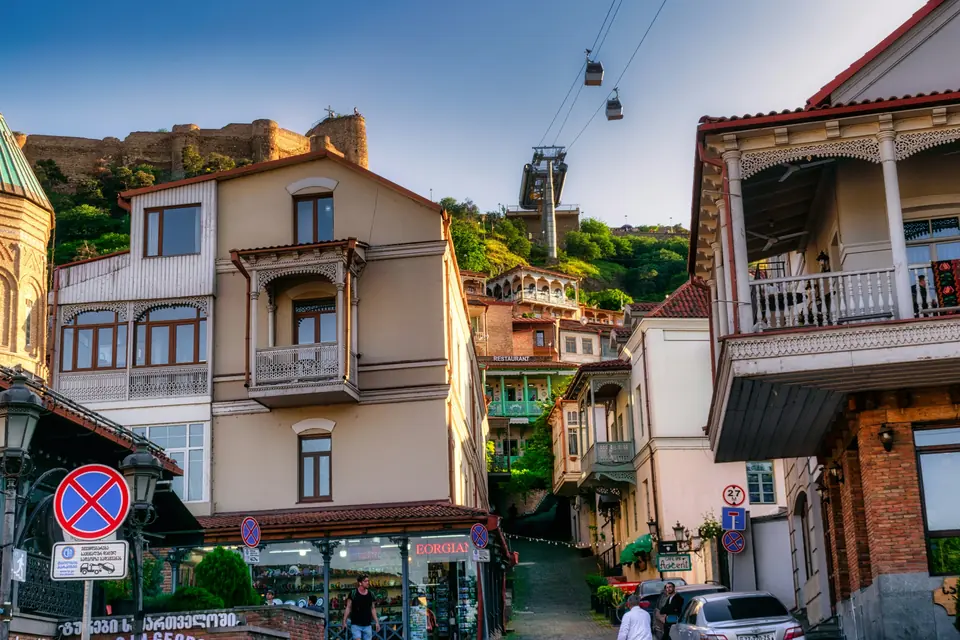
- Plan 2–3 full days for Tbilisi, plus day trips to Mtskheta or Kakheti.
- Highlights: old town and sulphur baths, cable car to Narikala Fortress, Rustaveli Avenue, National Museum.
- From the airport: bus 337 for 1 GEL (approx. 7 am–11 pm) or a taxi by app for approx. 15–35 GEL.
- Public transport: metro and bus 1 GEL for 90 minutes, pay by card.
- Best time: April–June and September–October; July/August often above 30 °C.
Tbilisi is loud, warm-hearted and full of contrasts: wooden balconies next to glass buildings, sulphur baths next to wine bars. The capital is the starting point of almost every trip to Georgia. Here you find the most important sights, the best neighbourhoods and a plan for three days.
The most important sights
| Sight | What to expect | Price (guide value) |
|---|---|---|
| Old town & Abanotubani | sulphur baths under brick domes, lanes, waterfall in the gorge | free |
| Cable car to Narikala Fortress | from Rike Park across the river up the hill, view over the city | approx. 2.50 GEL per ride |
| Mother of Georgia (Kartlis Deda) | statue on the hill above the old town | free |
| Rustaveli Avenue | grand boulevard with opera, parliament, museums | free |
| Georgian National Museum | gold treasures, history, art | approx. 40 GEL |
| Mtatsminda | mountain with a park, reached by funicular | ride approx. 10 GEL + 2 GEL park card |
| Dry Bridge | flea market with Soviet souvenirs, paintings, antiques | free |
| Sameba Cathedral | one of the largest Orthodox churches in the world | free |
Prices according to 2026 travel guides, not all officially confirmed. Parts of Narikala Fortress were recently fenced off for restoration – the view and the cable car are not affected (check the current status on site).
Sulphur baths: how it works
In Abanotubani warm sulphur water bubbles out of the ground – that is where the city's name comes from ("tbili" = warm). You rent a private room by the hour (according to guides from about 60 to over 150 GEL depending on the bathhouse) or go to the cheaper communal bath. A scrub (kisi) costs extra. Book ahead at weekends.
Which neighbourhood to stay in?
- Old town / Sololaki: right in the middle, many guesthouses and restaurants, partly steep lanes and louder at night.
- Rustaveli / Vake: central, good metro connections, more large hotels.
- Marjanishvili / Chugureti: trendy area around Fabrika (hostel, bars, courtyard with cafés), slightly cheaper.
Tbilisi in 3 days
- Day 1 – old town: Bridge of Peace, Rike Park, cable car to Narikala, walk down to Abanotubani, sulphur bath in the evening.
- Day 2 – avenue and museum: Rustaveli Avenue, National Museum, khachapuri for lunch, funicular up Mtatsminda for sunset.
- Day 3 – markets and neighbourhoods: Dry Bridge in the morning, Sameba Cathedral, Fabrika and Marjanishvili in the afternoon, wine bar in the evening.
Getting there and getting around
- From the airport: bus 337 runs from about 7 am to 11 pm for 1 GEL to the centre. At night: taxi by app (Bolt or Yandex Go, approx. 15–35 GEL) or a pre-booked fixed-price transfer, e.g. with Kiwitaxi*, about 20–30 minutes. With taxis at the exit, agree the price beforehand.
- Metro and bus: 1 GEL for 90 minutes, day ticket 3 GEL. Pay with a contactless bank card or Metromoney card (2 GEL).
- Taxi: by app with a fixed price – cheaper and less stressful than hailing on the street.
Which airlines fly to Tbilisi from Germany: Direct flights to Georgia.
Day trips from Tbilisi
- Mtskheta (approx. 20 km): the old capital with Svetitskhoveli Cathedral and Jvari Monastery, a UNESCO World Heritage Site – half a day.
- Kakheti: wine region with Sighnaghi and wineries – a full day, or better with an overnight stay.
- Kazbegi: Military Road with Ananuri and Gergeti Church – a very long day, better with an overnight stay.
Good to know
- Best time: April–June and September–October. In July and August it is often above 30 °C. More: Best time to visit Georgia.
- Costs: typical prices for food and accommodation are in Georgia travel costs.
- Safety: avoid demonstrations – they mainly take place on Rustaveli Avenue in front of parliament.
- Churches: cover shoulders and knees; women usually wear a headscarf (often available to borrow at the entrance).
Frequently asked questions
How many days do you need for Tbilisi?
2 to 3 full days are enough for the main sights. With day trips to Mtskheta, Kakheti or Kazbegi, 4 to 5 days with Tbilisi as your base are worthwhile.
How do I get from Tbilisi Airport to the city?
Bus 337 runs from about 7 am to 11 pm for 1 lari to the centre; you pay by card. At night take a taxi via an app such as Bolt or Yandex Go (about 15–35 lari) or a pre-booked transfer. The ride takes about 20–30 minutes.
Is Tbilisi safe?
For travellers, generally yes. Watch out for pickpockets in tourist areas and keep away from demonstrations, which mainly take place on Rustaveli Avenue in front of parliament.
How much do the sulphur baths in Tbilisi cost?
Private rooms are charged per room and hour; according to 2026 travel guides they cost from about 60 to over 150 lari depending on the bathhouse. Public communal baths are much cheaper. Book ahead at weekends.
Sources: Sakhva Travel: Tbilisi Cable Car 2026 · The Georgian Guide: Things to Do in Tbilisi 2026 · Wander-Lush: Tbilisi Airport · Madloba: Tbilisi Funicular (prices checked 3 Oct 2026) · Wander-Lush: Tbilisi Museums · German Federal Foreign Office: Georgia – travel and safety advice (German). All information without guarantee; rules can change at short notice.